Some places hide in plain sight. Nevidio Canyon spent so long hidden that the people who lived nearby gave it a name to match: Neviđbog, which loosely translates as "God has not seen it." For centuries the local saying held that even God had not glimpsed the canyon's interior, because the Komarnica River vanishes into a cleft so deep and so narrow that it becomes, in a very literal sense, invisible to the human eye. It was only in August 1965 that anyone managed to traverse its length, making it one of the last great natural corridors in this part of Europe to be explored.
Most visitors come for the adrenaline. But beneath the abseiling and the jumps lies something quieter and far older: a masterpiece of geology, a refuge for rare plants and animals, and one of Montenegro's most extraordinary nature attractions. This article steps back from the rush of canyoning Montenegro to explain how the canyon was made, what lives within and above it, and why it deserves protection. Whether you plan to descend through it or simply want to understand it, here is the natural story of Nevidio Canyon.
What Is Nevidio Canyon?
Nevidio Canyon (native spelling Neviđio Canyon) is a deep, exceptionally narrow gorge carved by the Komarnica River on the southwestern edge of the Durmitor massif in northern Montenegro, between the Durmitor and Vojnik mountains near the town of Šavnik. It sits within the protected boundary of Durmitor National Park and the surrounding Dragišnica i Komarnica Nature Park. Famous for passages barely wide enough for a person to squeeze through, it is today one of the premier canyoning destinations in the Balkans and a cornerstone of adventure tourism Montenegro.
The canyon is the short, dramatic stretch of a much longer system. The broader Komarnica gorge runs for roughly 40 kilometres; Nevidio is the tightest, most spectacular section near its head, where the river was forced into a slot it spent millennia cutting through solid rock.
The Geology: How Limestone and Water Made the Gorge
To understand Nevidio, you have to understand karst. The Durmitor region is built largely of limestone, a soft, soluble rock that water can both dissolve chemically and grind away mechanically. Across this kind of terrain you get sinkholes, caves, underground rivers, and dramatic surface gorges. Nevidio is the gorge version, taken to an extreme.
The Komarnica's Patient Work
The architect here is the upper Komarnica, sometimes called the Mala Komarnica, draining the snows and rainfall of the Durmitor massif. Cold meltwater is unusually effective at incising rock, and over an immense span of time the river carved near-vertical walls, narrow corridors, plunge pools, and a staircase of cascades. Geologists attribute the canyon's form to long-term fluvial incision combined with glacial processes, with one source dating the most recent shaping to around 12,000 years ago. That single figure is worth treating loosely, but the broad picture is solid: the canyon is the product of cold, fast water working downward through limestone for a very long time.
What makes the result so unusual is the proportion. Rather than widening as it deepened, the gorge stayed tight, in places so tight that the walls almost touch overhead. This is why so little daylight reaches the floor, and why the river effectively disappears from view.
The Dimensions: Numbers That Refuse to Settle
Nevidio is famous for being hard to measure, which feels appropriate for a place named after the unseen. Sources disagree on its length depending on what they are counting.
| Feature | Figure | Notes |
|---|---|---|
| Traversed canyoning section | approximately 1.7–2.7 km | the active, technical part |
| Full geological canyon | around 3.5 km | also cited as 3.0–3.8 km |
| Narrowest width | around 25 cm | at the tightest point |
| Wall height | approximately 350–450 m | in the highest places |
| Elevation drop (entrance to exit) | around 125 m | entrance ~935 m, exit ~810 m |
The most repeated figure for the whole canyon is around 3.5 kilometres, though the traversed section that adventurers actually move through is shorter. The truly memorable statistic is the width. At its tightest, in an approximately 80-metre-long passage known as the Kamikaze Gate, the canyon is said to narrow to around 25 centimetres, and many of its corridors are under a metre across. The cliffs above climb to somewhere around 350 to 450 metres in the most dramatic stretches. These exact numbers come largely from tourism sources, so treat them as approximate, but the experience they describe, of squeezing sideways between towering walls under a thin ribbon of sky, is entirely real. For more on how that feels underfoot, see our complete guide to Nevidio Canyon.
The Water: Cold, Clear, and Always Working
The Komarnica is genuinely cold. Summer water temperatures are commonly cited at around 5 to 10 degrees Celsius, even in July and August, because the river is fed by snowmelt and rainfall from high on the massif. That chill is not a footnote. It is the reason a wetsuit is mandatory on every descent, and it is part of what keeps the canyon's ecosystem distinct.
Water level matters even more than temperature. Early and late in the year, high flow makes the canyon faster, colder, and far more dangerous, which is why it only opens once the river drops to safe levels, typically from June into late September. The same cold, persistent water that carved the gorge continues to shape it today, scouring the pools deeper and polishing the rock smooth. If you are weighing when to go, our seasonal guide to visiting Nevidio breaks down the trade-offs month by month.
The Flora of Durmitor: Ancient Pines and Endemic Plants
Step back from the canyon floor and you are standing in one of Europe's botanically richest mountain landscapes. Durmitor National Park supports around 700 vascular plant species across an altitude range from roughly 450 metres to over 2,500 metres.
The Black Pine Forests
The signature trees here are European black pines, some of them genuinely ancient. The park's old-growth stands include specimens around 400 years old and up to roughly 50 metres tall, survivors that were already mature when the canyon was first being seriously explored. Walking beneath them on the approach, you get a sense of deep time that complements the geology below.
Endemic Species
Endemism, the presence of plants found nowhere else, is a key part of Durmitor's value. UNESCO-aligned figures cite 37 species endemic to the wider area and 6 endemic specifically to Durmitor. Other sources quote much higher numbers, such as 175 endemics, but those reflect a broader regional definition rather than the strict park boundary, so the conservative figures are the safer ones to rely on. Either way, the message is the same: these mountains shelter botanical rarities that exist in very few other places on Earth.
The Fauna: Wildlife Above and Around the Canyon
The wildlife of Durmitor is as compelling as its rock. The park is home to large mammals including brown bear, grey wolf, European wild cat, chamois, and river otter, a roster that places it among the more genuinely wild corners of the continent. You are unlikely to meet a bear inside the canyon itself, but you are moving through their wider home.
Birds of the Skies and Cliffs
For birdwatchers, Durmitor is a quiet treasure. Around 130 bird species have been recorded, including golden eagle, short-toed eagle, honey buzzard, and peregrine falcon riding the thermals above the gorge, along with capercaillie and black grouse in the forests. The high cliff walls of Nevidio make natural perches and nesting ledges, so a glance upward between passages can be rewarded.
Life in the River
The Komarnica's waters also support fish, including the endangered Danube salmon, also known as huchen. Its presence is a marker of clean, cold, well-oxygenated water, exactly the conditions the river provides, and a reminder of how much depends on the canyon staying as it is.
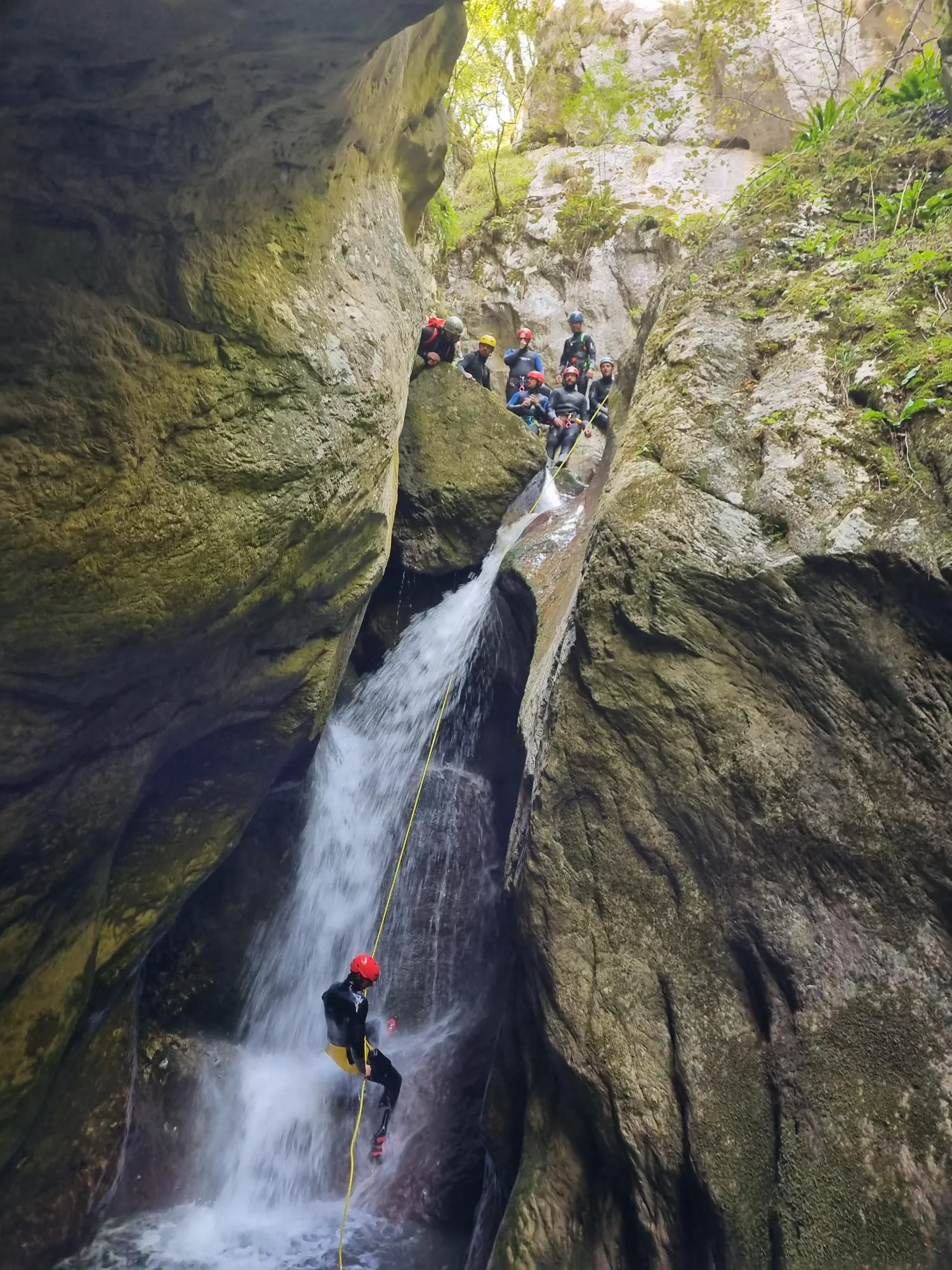
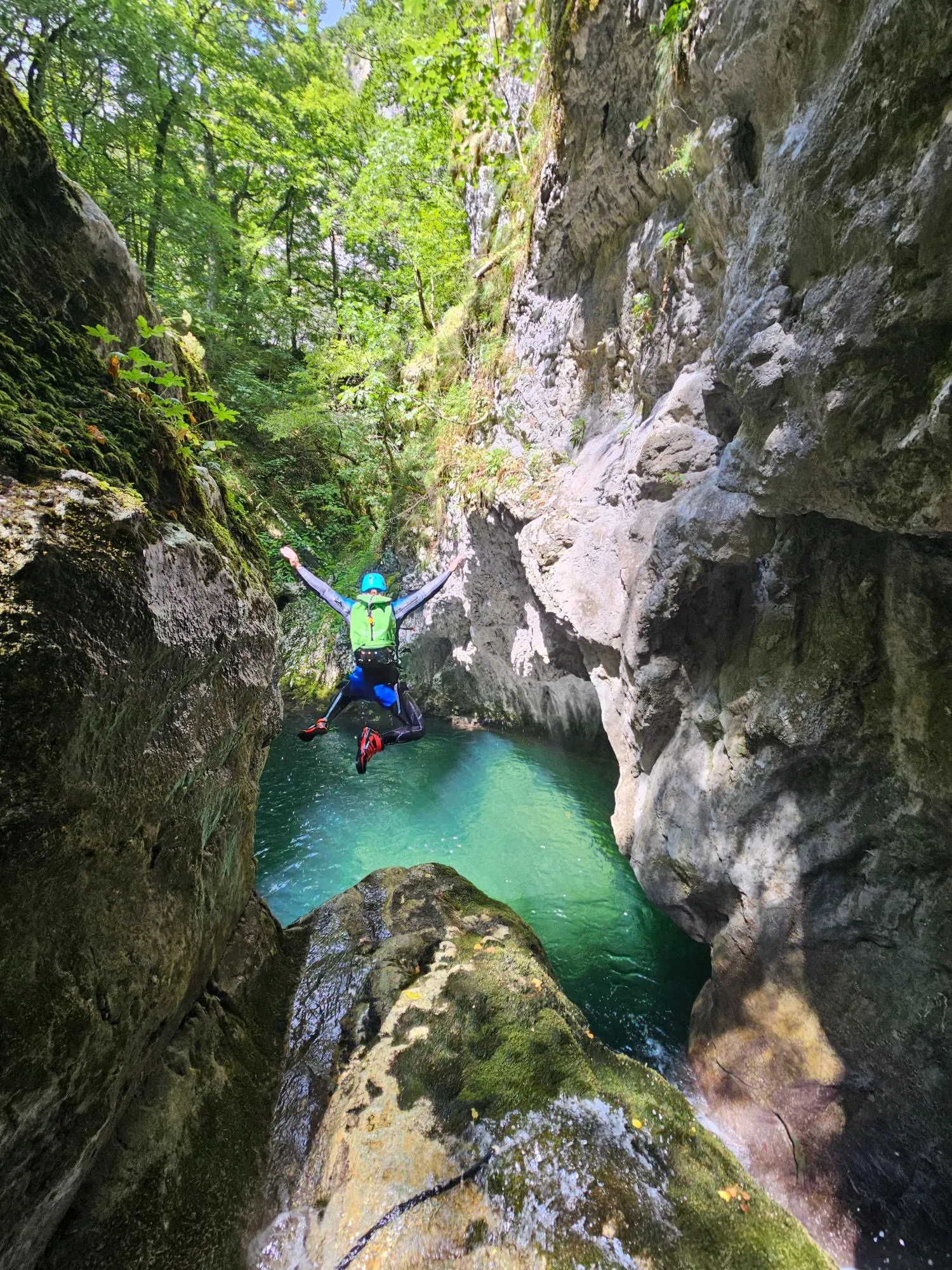
Natural Pools and Waterfalls
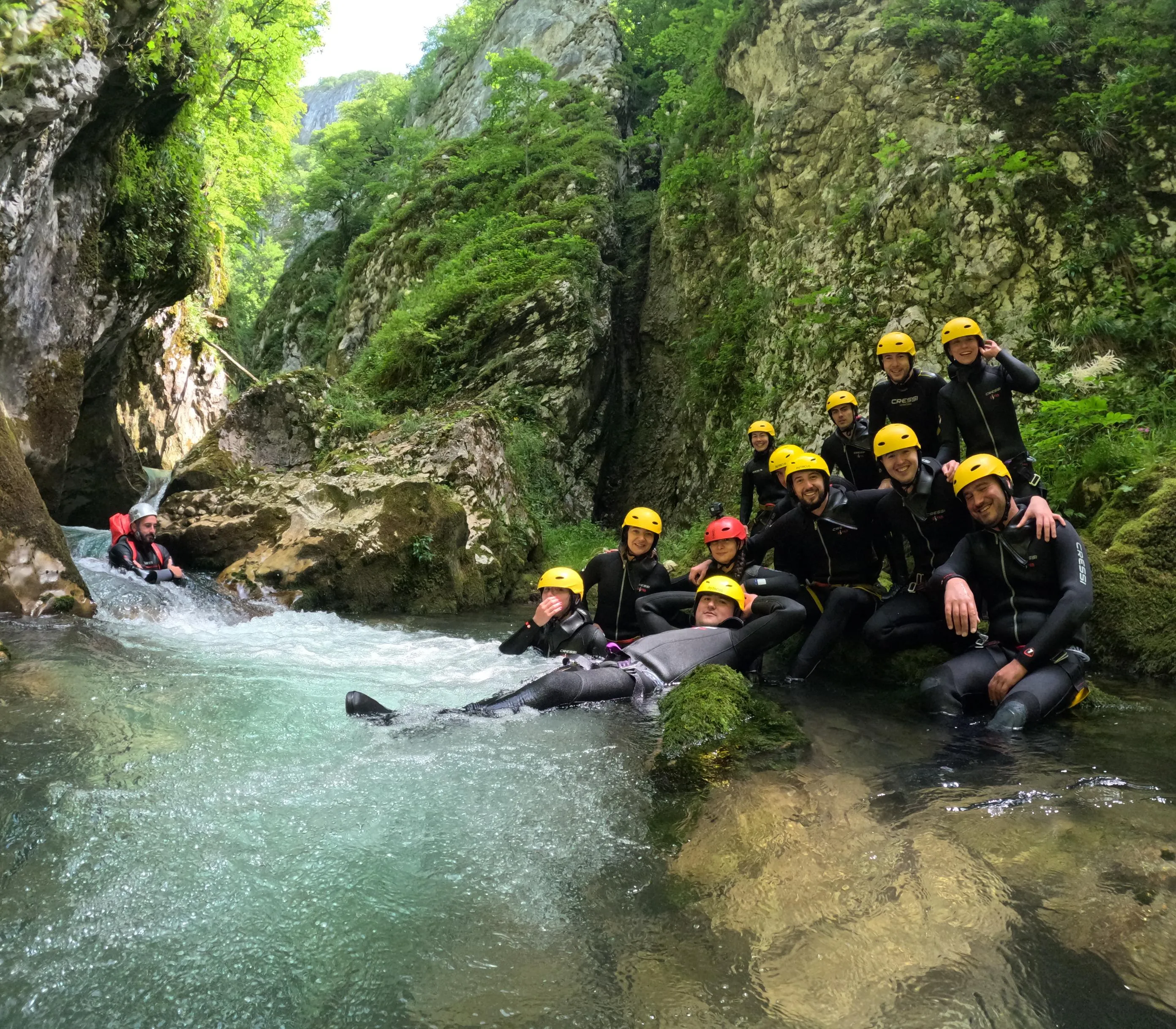
Inside the gorge, the river has built a sequence of natural features that look almost designed. Deep emerald pools sit between sculpted ledges, fed by waterfalls and cascades that tumble through the narrows. Smooth rock chutes form natural water slides, and the cold water collects in basins where the current slows. These pools and falls are not just scenery; they are the obstacles that make the descent what it is, requiring you to swim, wade, scramble, and abseil your way downstream. Because the route is one-directional, every pool and cascade you pass is one you commit to. If you want to understand exactly what that commitment involves before you go, read our overview of what to expect on a first canyoning visit.
Conservation: A Protected Wonder Under Pressure
Durmitor National Park was inscribed on the UNESCO World Heritage List in 1980, with a boundary extension in 2005, recognised under natural criteria for its scenery, its geological significance, and its biodiversity. The park covers around 321 square kilometres and includes roughly 18 glacial lakes, the celebrated "mountain eyes," of which Black Lake near Žabljak is the most famous. Bobotov Kuk, at around 2,523 metres, crowns some 50 peaks that rise above 2,000 metres.
Protection does not mean the canyon is free of threats. The Komarnica River has been the focus of attention amid proposed hydropower development, the kind of intervention that could alter the very flow that carved and sustains Nevidio. For a place defined by wild, free-running water, that question matters a great deal, and it is one reason responsible, low-impact visits, the kind built around guided Montenegro adventure tours, help keep the spotlight on conservation.
Plan Your Own Encounter With the Unseen
Nevidio is one of those rare places where the science and the spectacle are the same thing. The narrowness that makes the canyoning so thrilling is the direct result of cold water cutting limestone for thousands of years. The wildlife circling overhead and the rare plants on the slopes are part of a protected landscape worth understanding before you arrive. To stand inside the gorge is to read all of that at once, walls, water, and light, in the most direct way possible.
If this natural story has drawn you in, there is no substitute for experiencing it firsthand with a licensed guide who knows the rock, the river, and the route.